
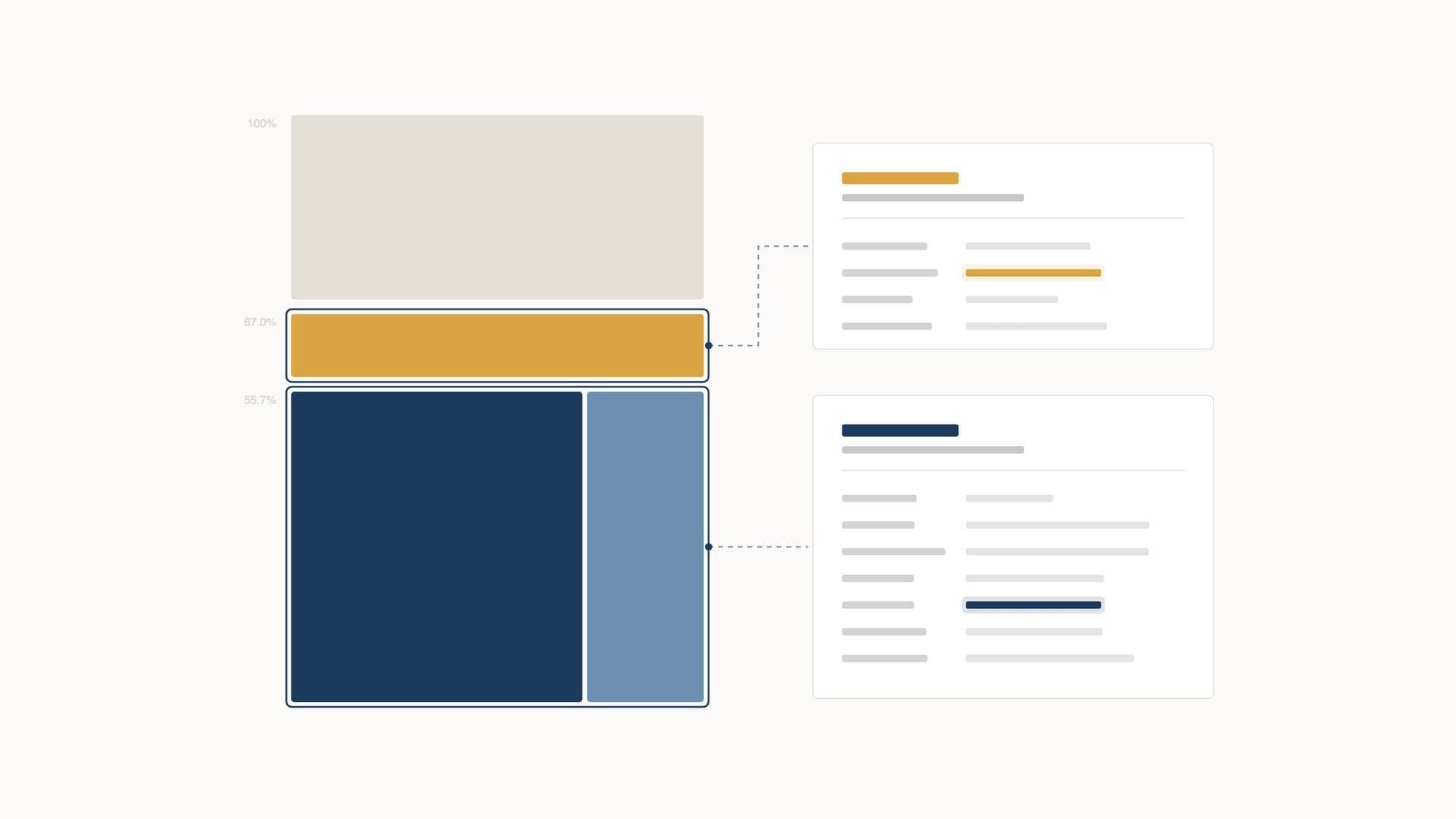
In commercial real estate, a property's value is only part of the story. To understand a deal, you need to know how it is financed, who has a claim on its cash flow, and who gets paid first when it is sold or refinanced.
That is the capital stack: the combination of debt and equity behind a property. It shows how a deal is structured, how risk is distributed, and how proceeds flow to lenders and investors. Whether you are underwriting an acquisition or monitoring an existing asset, the capital stack is the difference between seeing the full picture and deciding with incomplete information.
What Is a Capital Stack?
A capital stack is the set of financing layers behind a deal. Each layer has its own repayment priority, risk, and expected return. Structures vary, but most include four components:
Together, these layers determine how a deal is funded and how its outcomes are divided.
1. It Reveals Who Gets Paid First
Revenue does not flow straight to equity. Cash flow goes first to operating expenses and debt service, then follows the distribution priorities in the deal documents. The same is true at sale or refinancing: transaction costs, loan payoffs, and preferred returns come before common equity sees a dollar.
If a property sells for less than expected, the senior lender is still repaid first. Depending on the shortfall, junior capital can take substantial losses. The capital stack tells you where you sit in that line and what has to happen before you are paid.
2. It Shows the Real Risk of a Deal
Two deals can have similar properties, prices, and projected rents and still carry very different risk. The difference is often the financing. A property funded mostly with senior debt behaves differently from one layered with mezzanine debt or preferred equity.
Each additional layer raises the fixed obligations ahead of equity and shrinks the margin for error. If rents soften or expenses rise, a lightly levered property can absorb the hit; a heavily layered one may struggle to cover debt service, breach a covenant, or need new capital. The capital stack shows how much cushion a deal really has.
3. Debt Maturities Can Change the Investment Thesis
The maturity schedule is one of the most overlooked parts of a deal. A property can perform well and still hit a financing gap if its loan matures into higher rates, tighter lending standards, or lower values.
A loan sized in a low-rate environment may not be replaceable at the same amount, so the owner may have to contribute equity, negotiate an extension, or sell. For equity investors, that affects distributions, liquidity, and whether they get their capital back. Operating performance tells you how the property is doing; the debt tells you whether that performance can become a successful outcome.
4. It Determines How Returns Are Distributed
A property can perform reasonably well and still produce a disappointing return for a particular investor if financing costs, debt repayment, or competing priorities absorb the proceeds. The capital stack shows whether the projected return matches your position and the risk you are taking.
The order of payments matters as much as the total. Interest and principal come first, then any preferred return, and only then the common equity's share. A deal that promises a strong headline return may deliver much less to the last layer in line once every obligation above it has been paid.
5. It Exposes Hidden Leverage
The senior mortgage rarely tells the whole story. Mezzanine debt and other subordinate obligations add to what must be repaid, and preferred equity adds distribution preferences ahead of common equity. None of it shows up on the senior loan balance.
Take two properties with the same value and the same senior loan. If one also carries a mezzanine loan or a large preferred equity position, far more capital sits ahead of its common equity. That changes the equity cushion, the property's financial flexibility, and the proceeds that reach investors. Both must be counted before the equity position is clear.
6. It Decides What an Exit Is Worth
A successful exit is not just a higher sale price. Suppose a property sells for $50 million. What reaches equity depends on remaining loan balances, transaction costs, and other obligations. If most of the proceeds repay debt, equity proceeds can be far smaller than the headline suggests, and if the price disappoints, junior capital absorbs the loss.
The same logic applies to a refinancing. New loan proceeds first retire the existing debt and cover closing costs; only the remainder, if any, is available to return capital. Knowing the stack tells you what an exit is worth before the sale price is known.
7. The Most Recent Capital Stack Matters Most
Financing is not static. Loans get refinanced, balances change, maturities get extended, new debt is added, and equity gets restructured. A stack that was accurate at acquisition may not describe the property today, and working from stale information means missing debt or an approaching maturity.
Investors, lenders, and brokers need current answers: What debt is outstanding, and to whom? What are the balances and maturity dates? How much capital sits ahead of equity? Those answers live in the documents: the loan agreement, the intercreditor agreement, the JV and preferred equity agreements, and the latest payoff or estoppel letters. A summary from closing is a starting point, not a verified position.
Bringing the Capital Stack Into Focus
Understanding a commercial real estate deal takes more than knowing location, income, occupancy, and valuation. It takes understanding the financing behind the asset. The capital stack connects those pieces: how the deal is funded, how risk is shared, and how cash flow and exit proceeds are allocated.
The bottom line: knowing what a property is worth matters. Knowing who is owed money, how much, when it is due, and what remains for equity can matter just as much. The property tells you what the asset is. The capital stack tells you how the deal works.
Notessa's capital stack workflow pulls every tranche and its payment priority straight from the deal documents.