
There’s a famous line often attributed to Henry Ford: “If I had asked people what they wanted, they would have said faster horses.”
Sometimes, the problem isn’t that a tool needs to get better. It’s that we’re asking the wrong tool to do the job.
Take the stacking plan.
The idea is simple and useful. It gives teams a visual picture of a building and makes it easy to see who occupies what, how much space they have, and what’s coming up. It’s basically the building’s family tree, if family trees had square footage, lease expirations, and renewal options.
For years, we’ve built those plans in Excel.
Open the spreadsheet. Find the tenant. Check the square footage. Squint at the lease expiration. Change a cell from yellow to a slightly different, more meaningful yellow. Save it. Email it. Print it. Save it again. Too many versions. Too many colors. Too much hunting for the latest file.
The stacking plan isn’t the problem. The problem is that we’ve taken a powerful way to understand a building and turned it into a spreadsheet we have to constantly maintain, reconcile, and redistribute.
Maybe we don’t need a faster spreadsheet.
Maybe we need a different vehicle.
A building is not a spreadsheet
A property is a living, breathing, occasionally litigious organism.
Tenants renew. Tenants leave. Leases get amended. Options get exercised. Space gets split, then combined, then split again by someone who swears it made sense at the time. And every so often, someone discovers an amendment that has been living rent-free in a folder called Miscellaneous since 2019.
Meanwhile, the stacking plan sits quietly on someone's desktop, frozen in time.
That is the problem.
Your stacking plan should know more
A decent stacking plan tells you that Suite 400 is occupied by Tenant A.
A great one tells you everything that matters about Suite 400:
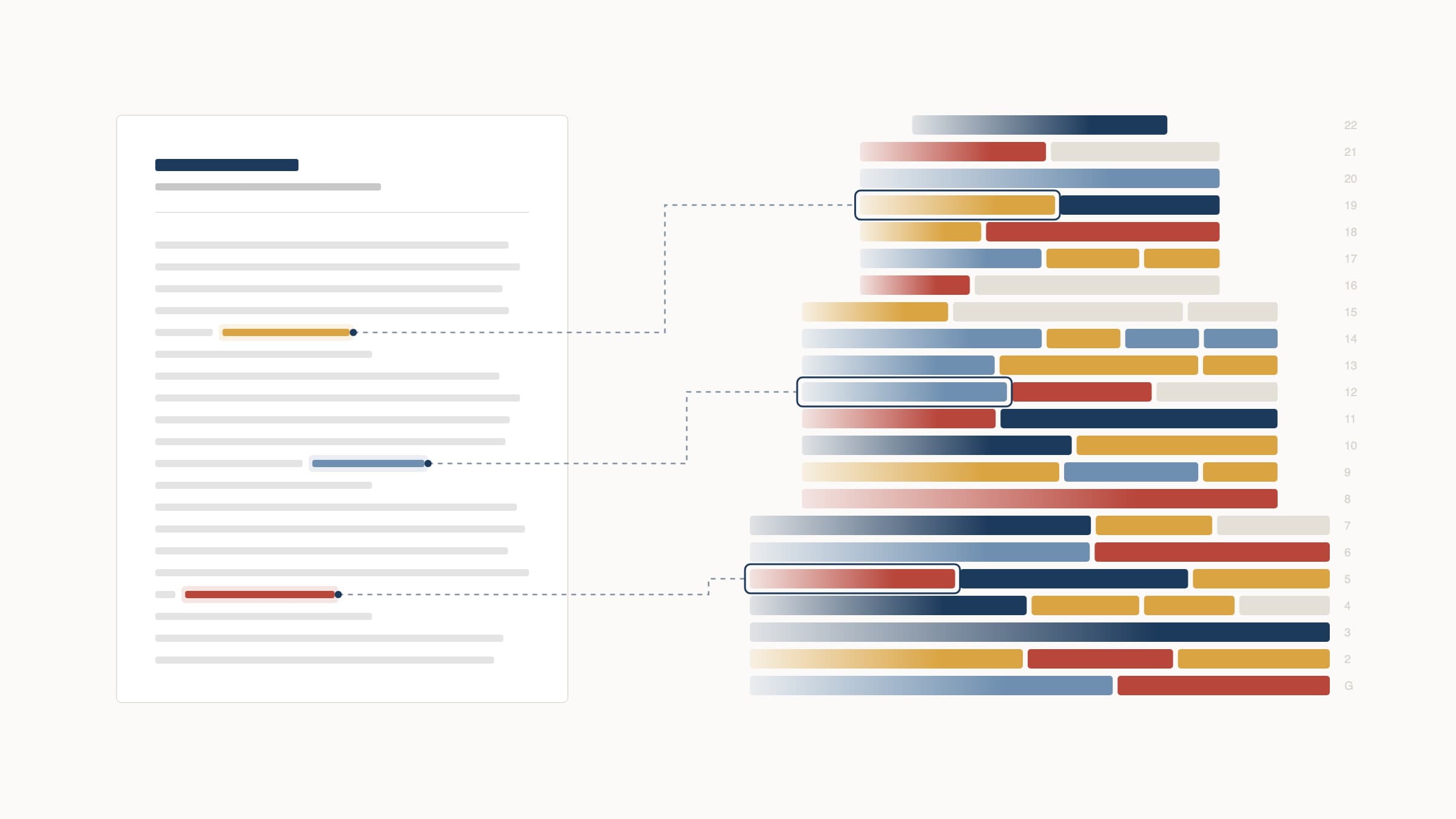
Meet the stacking plan that actually works for you
Notessa brings property, tenant, lease, and space information together, so your team can understand an asset without playing an endless game of "Where's the Missing Puzzle Piece?"
Here's what that looks like in practice. Below is a demo stacking plan for Larkspur Tower, a fictional Class A office building in Chicago's West Loop. The tenants, suites, rents and dates are all made up, but the plan works the way Notessa does with a real lease file.
It's fully clickable and interactive. Click any suite to open its lease details, switch the colours between tenant and lease maturity, and use the tabs to move between the rent roll, critical dates and risk alerts. For a bigger view, select "Open full screen".
The goal isn't to make another prettier spreadsheet. Remember those faster horses? A prettier spreadsheet is just a faster horse.
The goal is to make the information around an asset easier to navigate, easier to understand, and easier to act on.
Your stacking plan should help you see the building.
Then it should help you understand the building.
Then, ideally, it should help you figure out what to do about the building.
A modern stacking plan should be dynamic, connected, and useful at the exact moment decisions get made, not 45 minutes later, after someone finally finds the right version.
Because the goal isn't to build the world's most impressive stacking plan.
The goal is to know your asset well enough to make better decisions about it.